

How Much Do Snap-In Denture Implants Cost (in Manchester, CT)? A Practical Pricing Guide
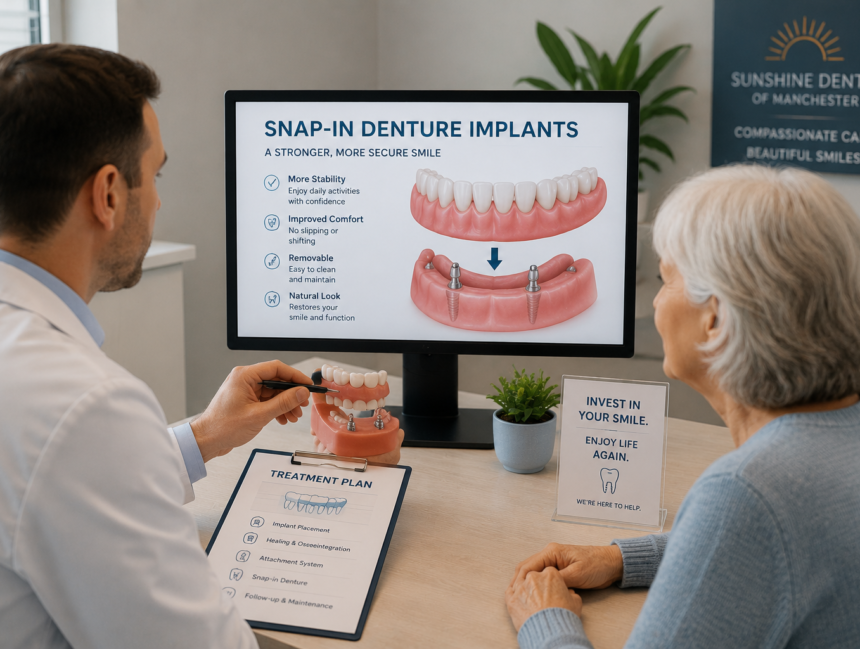
If you are researching tooth replacement and asking how much do snap-in denture implants cost (in Manchester, CT), you are not alone. Snap-in dentures (also called implant-retained overdentures or snap-on dentures) can feel like the best of both worlds: more secure than traditional dentures, but still removable for easier cleaning and maintenance. The challenge is that pricing is rarely one simple number, because the total depends on how many implants you need, what type of attachment system is used, and whether you need any preparatory care before implant placement. At Sunshine Dental of Manchester, we believe the clearest way to understand cost is to understand what is included, what can change the treatment plan, and which decisions have the biggest impact on the final investment. Below is a straightforward guide you can use when budgeting and comparing options. What do “snap-in denture implants” mean Snap-in dentures are removable dentures that attach to implants placed in the jaw. The implants provide stability, and the denture “snaps” into place using a retention system. The two most common designs are: Both are different from a fully fixed solution (such as an All-on-4 style bridge) because you remove the denture for cleaning. Typical cost ranges and why the numbers vary When people ask how much do snap-in denture implants cost (in Manchester, CT), they usually want a realistic range to plan around. Nationally, many dental practices and implant resources commonly cite snap-in overdenture costs that can range widely depending on implants and design, often starting in the several-thousand-dollar range per arch and rising significantly for more complex bar-retained or higher-implant designs. For local context, some dental providers in Manchester, CT describe implant dentures as a service offered in the area, which reinforces that costs are market-based and plan-specific, but published pricing details still vary widely and usually require an exam. The most honest answer is this: snap-in dentures can be a moderate-to-significant investment, and the range is large because your plan is customized. Two patients can both be told they need “snap-in dentures,” yet one needs minimal prep and two implants, while another needs extractions, bone grafting, and a more robust attachment system. What is usually included in the total price A full snap-in denture treatment plan generally includes several components. Some offices bundle these items; others itemize them. Either way, the total usually reflects: At Sunshine Dental of Manchester, we encourage patients to ask for a written breakdown that clarifies what is included and what could be added depending on findings during diagnosis. The biggest factors that drive cost in Manchester, CT 1) How many implants do you need Implant number is one of the largest cost drivers. Your dentist will recommend an implant count based on anatomy, bite forces, and your goals for stability. 2) Attachment type: Locator-style vs bar-retained Resources that compare overdenture designs commonly note that bar systems tend to cost more than simpler attachment styles. 3) Whether you need extractions first If failing teeth are still present, extractions may be needed. Some patients also need an interim denture while healing occurs. 4) Bone grafting or sinus grafting If bone volume is insufficient, grafting may be recommended to improve long-term implant success. 5) New denture vs converting an existing denture Converting an existing denture can sometimes reduce costs, but only if the current denture fits well, is structurally sound, and is suitable for an implant conversion. Many patients ultimately benefit from a new overdenture designed for implants because fit and bite are crucial for comfort. 6) Your bite forces and grinding habits Heavy clenching or grinding can increase the need for reinforcement, changes in tooth setup, or protective appliances. This matters because broken dentures and worn attachments can become a costly pattern if bite forces are not managed correctly. “Per arch” vs “full mouth” pricing: how to think about it Snap-in dentures are often planned and priced per arch (upper or lower). A full-mouth plan includes two arches and typically increases total complexity. If you are planning full-mouth care, it is especially important to understand sequencing, healing timelines, and whether your provider is staging treatment in phases. Insurance considerations for snap-in dentures Coverage varies widely. Some plans help more with the denture portion than with implants. Others may contribute toward implants under certain benefit structures, but many categorize implants as a major service or exclude them. Consumer finance sources also note that implant coverage is highly plan-dependent and often partial when available. Practical steps that help: At Sunshine Dental of Manchester, we recommend treating insurance as one piece of the financial plan, not the entire plan. A written estimate that shows insurance assumptions helps you budget accurately. Financing and budgeting strategies that many patients use If you are exploring how much do snap-in denture implants cost (in Manchester, CT) because you need a realistic plan, here are strategies that often help: The goal is not just affordability today. It is sustainability, meaning you can maintain the implants and denture comfortably long term. Maintenance costs: the part people forget to plan for One reason patients search how much do snap-in denture implants cost (in Manchester, CT) is that they want to understand the full cost of ownership, not just the initial procedure. Snap-in dentures require routine maintenance. Common ongoing items include: Planning for maintenance is one of the best ways to avoid frustration later. Snap-in dentures vs fixed implant bridges: cost and lifestyle differences Patients often compare snap-in overdentures to fixed bridges. Snap-in dentures: Fixed implant bridges: Your best option depends on your goals, anatomy, budget, and how you prefer to clean and maintain your teeth. Questions to ask at your consultation If you want a clear answer to how much do snap-in denture implants cost (in Manchester, CT) for your situation, these questions help: This turns cost from a guess into a plan. Common scenarios that change pricing Here are a few examples of why two people can get very different estimates: The bottom line on cost in Manchester,
Read More