


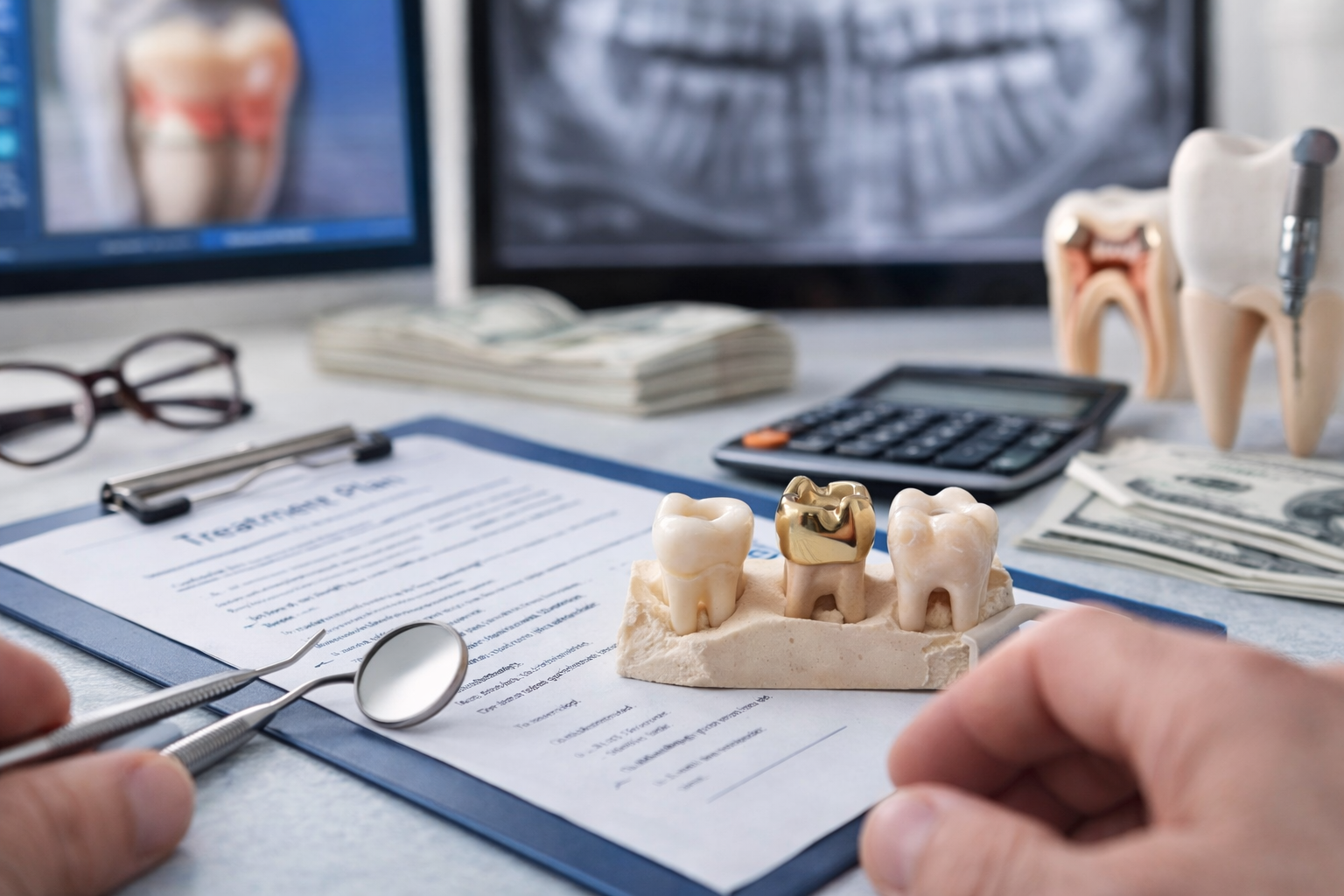
If you are comparing restoration options, you are probably trying to answer two practical questions at once: which crown is the right fit for your tooth, and what should you expect financially. Understanding types of dental crowns and cost makes that decision much easier, because the material you choose affects strength, appearance, and how the crown performs over time.
Below, we walk through the most common crown options and why a dentist might recommend one over another, along with the real world factors that shape the overall investment. You will also find links to two related articles on our site that go deeper into budgeting and how long crowns typically last.
A dental crown is a custom restoration that covers a tooth to restore strength, shape, and function. Crowns are commonly recommended when a tooth is too weakened for a filling to last reliably, or when the tooth needs full coverage protection.
Crowns are used to:
A crown is not just a cap. It is a carefully designed restoration that must fit your bite, seal the tooth, and support healthy gums at the margin.
When patients research types of dental crowns and cost, it helps to know that materials behave differently in the mouth. Some are stronger under heavy chewing forces. Some are more lifelike for front teeth. Some are easier to adjust for a precise bite. Each option comes with pros and tradeoffs.
The best crown is not the most expensive crown. It is the crown that fits your tooth, your bite, your cosmetic goals, and your long term maintenance needs.
Below is an overview of the most common crown categories. Your dentist may recommend one or more depending on which tooth is being restored and how much natural tooth remains.
What they are: Zirconia is a high strength ceramic. Many zirconia crowns are milled from a solid block (monolithic), which makes them very resistant to fracture.
Where they shine:
Considerations:
Cost drivers: Zirconia crowns can vary in cost based on the grade of zirconia used, how much characterization is needed, and whether the crown is designed for high esthetics or maximum strength.
“All ceramic” is a broad category that includes multiple materials. It is often used to describe metal free crowns designed for a natural appearance.
Where they shine:
Considerations:
Cost drivers: Higher esthetic demands, advanced shading, and detailed layering can increase lab complexity and influence overall investment.
What they are: A type of glass ceramic known for translucency and aesthetics. These crowns can look very natural, which is why they are popular for visible teeth.
Where they shine:
Considerations:
Cost drivers: Highly customized shade matching and detailed anatomy can increase time and lab work.
What they are: A crown with a metal substructure and a porcelain exterior. PFM crowns have a long track record and can be a strong, reliable choice.
Where they shine:
Considerations:
Cost drivers: Metal type, lab complexity, and whether the case requires extra esthetic work.
What they are: Crowns made entirely of metal, commonly gold alloys or other dental metals. These are known for excellent fit and long term durability.
Where they shine:
Considerations:
Cost drivers: Metal market prices can influence lab costs, and alloy selection can vary.
Temporary crowns protect the tooth between preparation and delivery of the final crown. They are not intended to last long term.
Where they shine:
Considerations:
These are primarily used for children’s baby teeth when a large portion of the tooth is decayed or compromised. They are durable and designed to last until the tooth naturally falls out.
When people search types of dental crowns and cost, they often assume the material is the only factor. Material is important, but it is rarely the only factor. In reality, the final cost is influenced by a combination of clinical and logistical needs.
A crown must sit on a stable foundation. If the tooth has lost significant structure, additional steps may be needed before the crown can be placed predictably.
Common examples:
Back teeth take heavier loads. Front teeth may require advanced esthetic design. Both can affect crown selection and lab complexity.
Healthy gums support long term success. If a margin is difficult to clean, the risk of inflammation and recurrent decay increases. In some cases, small gum adjustments or periodontal care may be recommended so the crown can be maintained.
Crowns can be created through a traditional lab workflow or digital scanning and milling processes. In some cases, a crown may be created more quickly using same day systems. The right option depends on material, tooth position, and your functional needs.
A crown that blends seamlessly with neighboring teeth may require additional shade matching, shaping, and finishing steps.
Insurance does not change the clinical requirements, but it can change the financial portion you pay. Coverage varies by plan, and many plans categorize crowns as a major service with specific limits.
A helpful way to decide is to think in terms of five priorities:
A front tooth crown may benefit from a highly aesthetic ceramic. A molar crown may benefit from zirconia or metal for durability. A person who grinds may need a nightguard regardless of the material.
While the exact steps depend on the tooth and material, most crown treatment follows this sequence:
Because this page is designed to help you plan without relying on generic numbers, here is a more practical approach:
This approach gives you clarity without guessing.
If you want a deeper budgeting discussion, read our related blog: How Much Is a Dental Crown (in Manchester, CT)? What Impacts Cost and How to Plan.
A crown is designed to last for years, but longevity depends on the crown material, your tooth health, and your daily habits. Most early crown failures are not because the crown “wears out” overnight. They often involve:
Crowns last longer when patients:
For a detailed look at timelines and how to extend crown lifespan, read our related blog: How Long Do Dental Crowns Last? A Manchester, CT Patient Guide.
Not always. All ceramic crowns can be beautiful and strong, but metal crowns and PFMs still have advantages in certain cases, especially for heavy bite forces and long term durability in back teeth.
Not necessarily. Strength is one factor, but aesthetic customization, lab complexity, and supporting procedures can also influence the overall investment.
The crown material itself does not decay, but the natural tooth at the margin can. That is why flossing and gum health are so important.
Many root canal treated teeth benefit from crowns because they can be more prone to fracture. Your dentist will evaluate how much tooth structure remains and whether reinforcement is needed.
The best way is a clinical exam and a conversation about your priorities. Your dentist will recommend options based on bite, tooth location, gum health, and esthetic needs.
Choosing the right crown is a balance of strength, aesthetics, and long term health. When you understand the types of dental crowns and cost, you are in a better position to ask the right questions, compare options, and plan with confidence. Most of the uncertainty disappears once your dentist evaluates the tooth, explains the material recommendation, and provides a written plan that shows what is included and what supporting care may be needed.
Crowns can be a reliable way to save and strengthen teeth, but the best results come from choosing the right material for the right tooth and maintaining it with consistent care. If you want a personalized recommendation on crown types, a clear explanation of options, or a written estimate tailored to your tooth, we invite you to visit Sunshine Dental of Manchester’s website to learn more or explore our services.
Related reading on our website:
Lorem ipsum dolor sit amet consectetur adipiscing elit ut arcu a dignissim suscipit non ac eget tellus in nisl mauris nec.