Types of dental implants: everything you need to know
Single crown, bridge, snap-in denture or a fixed full arch? Here is how each implant option works, who it suits, and how our Manchester team helps you pick the right one.
Read More


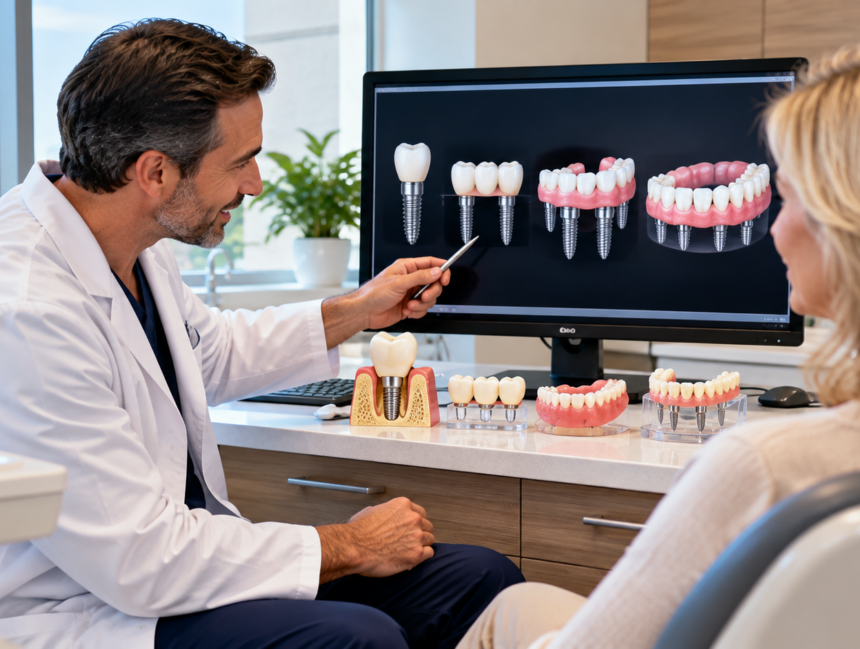
Single crown, bridge, snap-in denture or a fixed full arch? Here is how each implant option works, who it suits, and how our Manchester team helps you pick the right one.
Read More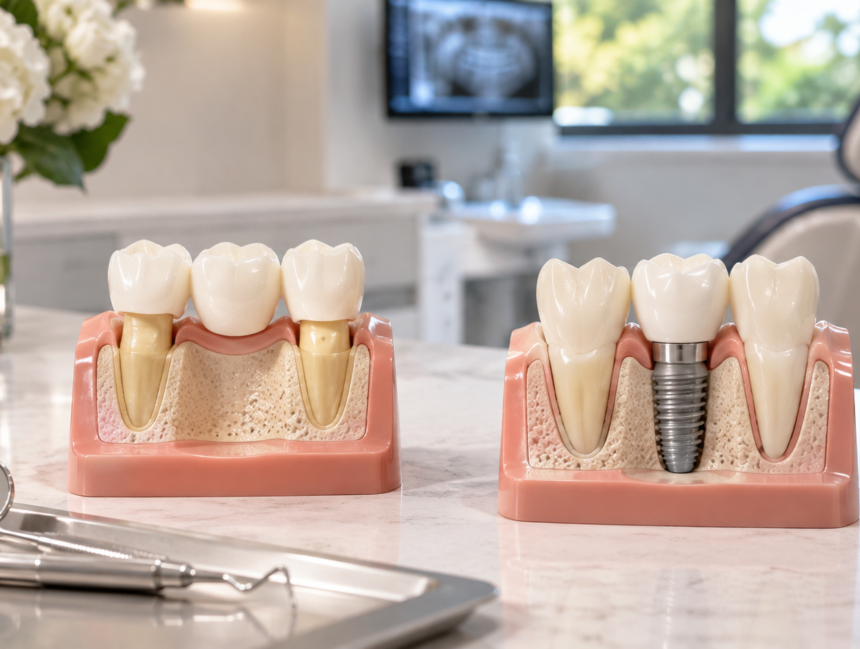
By Sunshine Dental of Manchester When you are missing a tooth, the space can affect much more than your smile. It can change the way you chew, speak, and feel about your appearance. It can also allow nearby teeth to shift over time. Two of the most common ways to replace a missing tooth are a dental bridge and a dental implant. If you are comparing dental bridge vs implant options, the right choice depends on your oral health, budget, timeline, and long-term goals. AtSunshine Dental of Manchester, we help patients understand both options clearly so they can make confident decisions. A dental bridge and a dental implant can both restore a missing tooth, but they work in very different ways. In this article What is a dental bridge?What is a dental implant?Dental bridge vs implant: the main differenceComparing the procedureComparing appearanceComparing chewing functionComparing treatment timelineComparing cost planningComparing impact on nearby teethComparing bone healthComparing maintenanceComparing longevityWhen a dental bridge may be the better choiceWhen a dental implant may be the better choiceWhen neither option is obviousQuestions to ask before decidingDental bridge vs implant: which is right for you? What is a dental bridge? A dental bridge is a fixed restoration that replaces one or more missing teeth by using nearby teeth or dental implants for support. A traditional bridge usually includes crowns on the teeth next to the gap, with an artificial tooth in between. A dental bridge may be recommended when: One or more teeth are missing The neighboring teeth are strong enough to support the bridge The surrounding teeth already need crowns or have large restorations You want a fixed option that does not involve implant surgery You want to restore chewing function and appearance A traditional bridge is cemented in place and is not removed at home. You care for it by brushing, cleaning around the supporting teeth, and cleaning underneath the replacement tooth with special flossing tools. For more detail on how bridges are priced and planned, read our related blog: Dental Bridge Cost (in Manchester, CT): What Impacts Price and How to Plan. What is a dental implant? A dental implant is a small post that is placed into the jawbone to replace the root of a missing tooth. After the implant heals and bonds with the bone, a crown is attached to the implant to replace the visible tooth. A dental implant may be recommended when: One tooth is missing and the neighboring teeth are healthy You want to avoid reshaping nearby teeth You have enough bone to support an implant You want a long-term tooth replacement option You prefer a restoration that functions independently An implant is different from a bridge because it does not rely on the teeth next to the gap for support. It stands on its own, supported by the jawbone. Dental bridge vs implant: the main difference The biggest difference in the dental bridge vs implant decision is support. A traditional dental bridge is supported by the teeth next to the missing space. Those teeth are shaped for crowns, and the replacement tooth is attached between them. A dental implant is supported by the jawbone. It replaces the missing tooth root and supports a crown on its own. This difference affects treatment time, cost planning, maintenance, and how the surrounding teeth are treated. Comparing the procedure Dental bridge procedure A traditional dental bridge usually involves: Exam and treatment planning Preparing the teeth next to the gap Taking impressions or digital scans Placing a temporary bridge Creating the final custom bridge Cementing the bridge and adjusting the bite A bridge can often be completed in fewer steps than an implant, especially when no additional treatment is needed. Dental implant procedure A dental implant usually involves: Exam and 3D imaging Implant planning Implant placement surgery Healing and integration with the jawbone Placement of the abutment Final implant crown An implant generally takes longer because the jawbone needs time to heal around the implant before the final crown is placed. Comparing appearance Both a dental bridge and a dental implant can look natural when designed well. A bridge replaces the missing tooth and is shaped to match the surrounding teeth. If the missing tooth is visible when you smile, shade matching and gumline design are especially important. An implant crown is also designed to blend with nearby teeth. Because it replaces only the missing tooth and does not connect to neighboring crowns, it can feel very natural in the right case. If you want to understand what changes visually and functionally with bridge treatment, read our related blog: Before and After Dental Bridge: What to Expect from Treatment. Comparing chewing function Both options can restore chewing ability, but they do it differently. A dental bridge distributes chewing forces across the supporting teeth. This can work very well when those teeth are strong and healthy enough. A dental implant transfers chewing forces through the implant into the jawbone. This can make it feel similar to a natural tooth, especially once fully healed. Patients who are missing back teeth may need extra attention to bite forces because molars handle significant pressure during chewing. Comparing treatment timeline A dental bridge may be completed more quickly than an implant because it does not require implant healing time. This can make it appealing for patients who want a fixed replacement in a shorter timeframe. A dental implant typically takes longer because the implant must integrate with the bone. If bone grafting is needed, the process can take additional time. In simple terms: A bridge often has a shorter treatment timeline An implant usually has a longer treatment timeline Both require planning, precision, and follow-up care The best choice depends on whether speed, tooth preservation, or long-term independence is more important in your case. Comparing cost planning Cost is one of the biggest questions in the dental bridge vs implant conversation. The total investment depends on several factors. What affects dental bridge cost? Dental bridge cost can
Read More
If you are missing one or more teeth, it can affect more than the way your smile looks. It can change how you chew, how you speak, how your bite feels, and even how confident you feel in everyday moments. That is why many patients search for before and after dental bridge examples when they are considering treatment. They want to understand what actually changes, what the process involves, and what kind of result they can realistically expect. A dental bridge is designed to fill the space left by a missing tooth or teeth using a custom restoration that is supported by natural teeth or dental implants. At Sunshine Dental of Manchester, we help patients understand the full picture of dental bridge treatment, from the first consultation to the final result and long-term care. What is a dental bridge? A dental bridge is a fixed dental restoration used to replace one or more missing teeth. It is called a bridge because it literally bridges the gap between teeth. A traditional dental bridge usually includes: In some cases, a dental bridge may be supported by implants rather than natural teeth. The best option depends on your oral health, the number of missing teeth, bone support, bite, and treatment goals. Why do patients consider a dental bridge People often think of bridges as a cosmetic solution, but they also serve important functional purposes. Missing teeth can create changes throughout the mouth over time. A bridge may help: When looking at before and after dental bridge results, the most obvious difference may be the appearance of the smile, but the functional improvement can be just as important. Before a dental bridge: common concerns patients have Before treatment, patients may experience several challenges related to missing teeth. A visible gap in the smile If the missing tooth is near the front of the mouth, the space can make patients feel self-conscious. They may avoid smiling fully, speaking in photos, or laughing openly. Trouble chewing certain foods A missing tooth can make it difficult to chew comfortably, especially if the missing tooth is a premolar or molar. Patients may start chewing mostly on one side, which can create uneven pressure. Teeth shifting into the empty space Teeth naturally tend to move toward open spaces. Over time, nearby teeth may tilt or drift, and opposing teeth may move up or down into the gap. This can affect the bite and make future treatment more complicated. Changes in speech Some missing teeth, especially front teeth, can affect pronunciation. Certain sounds may feel less clear because the tongue no longer has the same support. Bite imbalance When one area of the mouth is missing support, the remaining teeth may take on extra pressure. This can lead to wear, soreness, or discomfort over time. After a dental bridge: what changes? The “after” stage of bridge treatment is about more than simply filling a gap. A well-designed bridge should improve comfort, appearance, and function. A fuller, more natural-looking smile One of the most noticeable changes after a dental bridge is the return of a complete smile. The replacement tooth is shaped and shaded to blend with the surrounding teeth as naturally as possible. Better chewing support A bridge helps restore chewing ability in the area where the tooth was missing. While it may take a short time to adjust, many patients find that eating feels more balanced once the bridge is in place. Improved bite stability By filling the empty space, a bridge helps support the relationship between upper and lower teeth. This can help reduce uneven force on remaining teeth. Reduced risk of shifting A dental bridge can help prevent neighboring teeth from moving into the missing tooth space, especially when placed before significant shifting occurs. More confidence in daily life For many patients, the biggest difference is confidence. A completed smile can make conversations, photos, meals, and social situations feel more comfortable. The dental bridge process from start to finish Understanding the process can make the before and after dental bridge transformation feel less intimidating. 1. Consultation and evaluation The first step is a dental exam. Your dentist evaluates the missing tooth space, the health of nearby teeth, your gums, your bite, and your overall oral health. This may include: At Sunshine Dental of Manchester, this step is important because the right bridge design depends on both appearance and function. 2. Treatment planning Once the dentist determines that a bridge is appropriate, the next step is planning the type of bridge, the materials, and any supporting treatment needed first. For example, if the supporting teeth have decay or old fillings, they may need care before the bridge is made. If an implant-supported bridge is being considered, additional planning and imaging may be needed. 3. Preparing the supporting teeth For a traditional bridge, the teeth next to the gap are shaped so crowns can fit over them. These crowns support the artificial tooth in the middle. After the teeth are prepared, impressions or digital scans are taken to create the custom bridge. 4. Temporary bridge In many cases, a temporary bridge is placed while the final bridge is being made. This protects the prepared teeth and helps maintain appearance and function during the waiting period. 5. Final bridge placement When the final bridge is ready, your dentist checks the fit, bite, color, and comfort. Adjustments are made as needed before the bridge is cemented or attached in place. The goal is for the bridge to feel comfortable, look natural, and function properly. What makes a dental bridge look natural? A natural-looking bridge depends on several details. Tooth color The bridge should match the shade of surrounding teeth. This is especially important for front teeth or teeth that show when you smile. Tooth shape A replacement tooth should not look too square, too long, or too bulky. It should fit the proportions of your smile. Gumline appearance The bridge should meet the gumline in a way that looks clean
Read More
If you are missing one or more teeth, a dental bridge can be a practical way to restore your smile, improve chewing, and keep nearby teeth from shifting out of place. It is also natural to wonder about dental bridge cost (in Manchester, CT) before moving forward. The answer depends on several factors, including the type of bridge, the number of teeth being replaced, the materials used, and whether the supporting teeth need additional care first. At Sunshine Dental of Manchester, we know that cost questions are part of making a confident treatment decision. A bridge is not a one-size-fits-all restoration, so the most helpful way to plan is to understand what influences the total investment and what questions to ask during your consultation. What is a dental bridge? A dental bridge is a fixed restoration used to replace one or more missing teeth. It “bridges” the gap with an artificial tooth, called a pontic, which is supported by either natural teeth or dental implants. A bridge may be recommended when: Unlike a removable denture, a traditional dental bridge stays in place. You brush around it daily and clean underneath it with special flossing tools or other devices recommended by your dental team. Why dental bridge cost varies from patient to patient When patients search for dental bridge cost (in Manchester, CT), they often hope for one simple answer. In reality, cost varies because the treatment is customized to the condition of your mouth. Two people may both need a bridge, but one may be replacing a single tooth with healthy support teeth on both sides, while another may need multiple teeth replaced, additional restorative care, or an implant-supported option. Those differences affect the materials, appointment time, lab work, and overall treatment plan. The main types of dental bridges The type of bridge you need is one of the biggest factors that can influence the final cost. Traditional dental bridge A traditional bridge is the most common type. It uses crowns on the teeth next to the gap to support the replacement tooth in between. This option may be recommended when the neighboring teeth are strong enough to support the bridge. If those teeth already need crowns or have large fillings, a traditional bridge can be a practical solution because it restores the missing tooth and strengthens the supporting teeth at the same time. Cantilever bridge A cantilever bridge is supported by a tooth on only one side of the missing space. This design is used less often because it places more force on the supporting tooth. It may be considered in select cases, usually in areas with lighter biting forces. Your dentist will evaluate whether this option is appropriate based on your bite and the location of the missing tooth. Maryland bridge A Maryland bridge uses a replacement tooth with small wings bonded to the backs of nearby teeth. It usually requires less alteration of the supporting teeth than a traditional bridge. This type is most often used for certain front tooth cases. It may not be the best choice for areas that handle heavy chewing pressure. Implant-supported bridge An implant-supported bridge is held by dental implants rather than natural teeth. This can be a strong option when several teeth are missing or when the adjacent teeth are not ideal supports. Because this option involves implant placement, healing time, and additional components, it is usually planned differently from a traditional bridge. It may involve a larger overall investment, but it can also help avoid placing crowns on healthy neighboring teeth. What affects dental bridge cost? Several factors can influence dental bridge cost (in Manchester, CT). Understanding these variables can help you make sense of your estimate. 1) The number of teeth being replaced Replacing one missing tooth is usually less complex than replacing several. A longer bridge requires more materials, more planning, and careful bite design to make sure the restoration can handle daily function. 2) The number of supporting teeth or implants A traditional bridge often involves crowns on the teeth next to the missing space. An implant-supported bridge may require two or more implants, depending on the number of missing teeth and the location of the gap. The more support needed, the more complex the plan may become. 3) The material used Dental bridges can be made from different materials, including porcelain, ceramic, zirconia, porcelain fused to metal, or other dental materials. The right choice depends on strength needs, appearance, and where the bridge will be placed. Front teeth often require more attention to esthetics. Back teeth need materials that can withstand stronger chewing forces. 4) The condition of the supporting teeth For a traditional bridge to work well, the supporting teeth must be healthy enough to hold crowns. If those teeth have decay, cracks, old failing fillings, or gum issues, they may need treatment before the bridge can be placed. Supporting care may include: These steps can change the total cost because they are separate from the bridge itself. 5) Gum and bone health Healthy gums help support long-term bridge success. If gum disease is present, it should be treated before final bridge placement. For implant-supported bridges, bone quality and volume are also important because implants need a stable foundation. 6) Lab work and customization A bridge must be designed to fit your bite, match your smile, and seal properly around supporting teeth or implant components. More detailed shade matching or complex tooth shaping can increase the amount of customization involved. 7) Temporary bridge needs Many traditional bridge cases include a temporary bridge while the final restoration is being made. The temporary protects the prepared teeth and helps maintain appearance and function during the interim period. What is usually included in dental bridge treatment? Every office structures treatment plans differently, but dental bridge treatment may include: At Sunshine Dental of Manchester, we encourage patients to request a written treatment plan so they can see what is included and what may be billed separately. Dental bridge
Read MoreLorem ipsum dolor sit amet consectetur adipiscing elit ut arcu a dignissim suscipit non ac eget tellus in nisl mauris nec.