

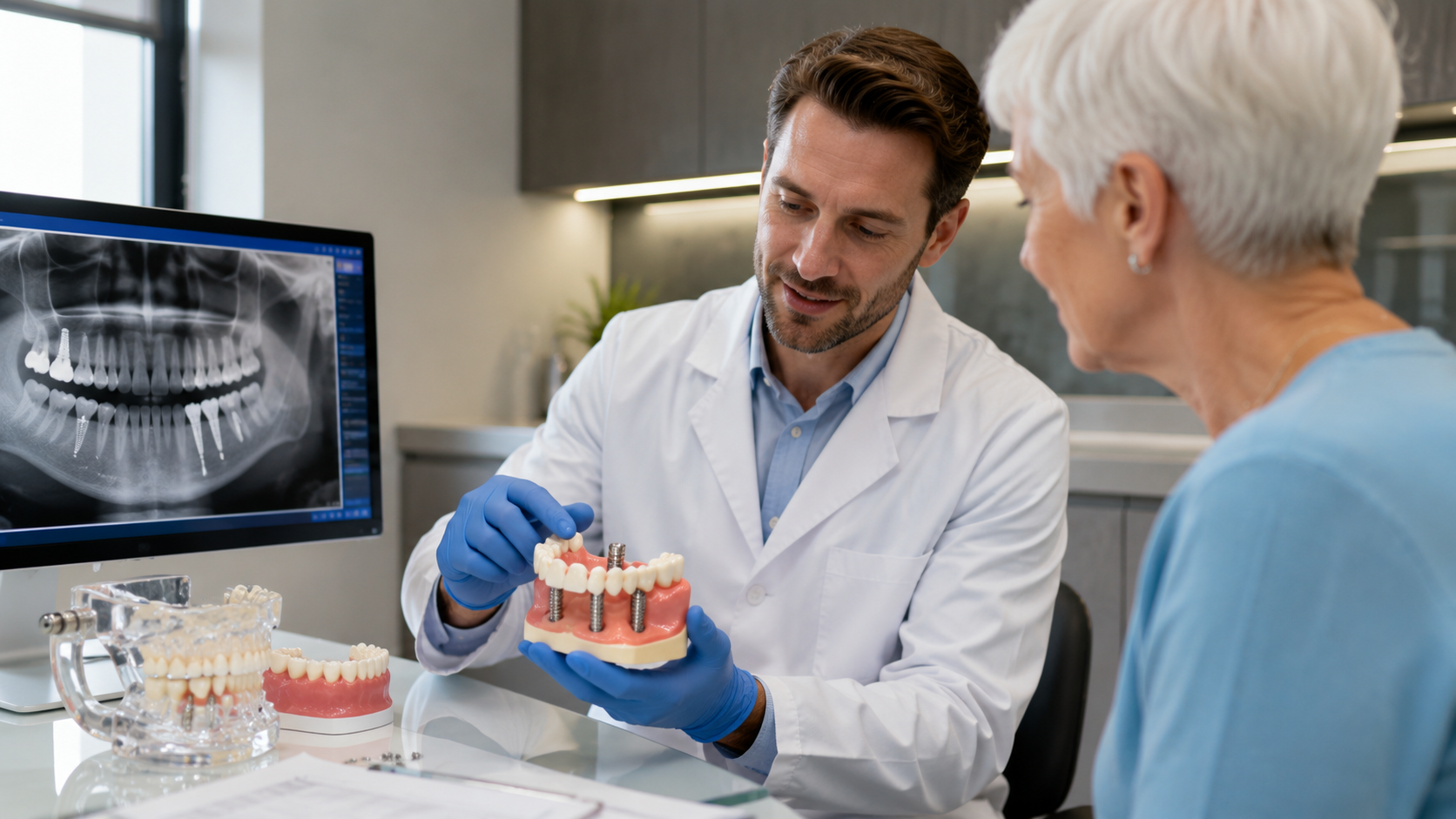
If you are weighing tooth replacement options, you are probably looking for two things at once: a clear explanation of how snap-in dentures work and a realistic way to think about snap in dentures cost. Snap-in dentures can offer a major upgrade in comfort and confidence compared to traditional dentures because they attach to dental implants for added stability. At the same time, the price and the process can feel confusing because treatment is customized, and the timeline includes multiple steps.
Snap-in dentures, sometimes called implant-retained overdentures, are removable dentures that “snap” onto dental implants using attachment components. You remove them at home for cleaning, but when they are in place, they feel noticeably more secure than traditional dentures that rely mainly on suction and adhesives.
There are two common designs:
At Sunshine Dental of Manchester, we help patients choose the design that fits their anatomy, goals, and comfort with daily cleaning.
Snap-in dentures can be a strong option if you:
They are not always the best fit for every patient, especially if you want teeth that stay in permanently or if medical or anatomical factors change the recommended plan. A consultation and imaging are the best way to confirm candidacy.
The procedure is best understood as a sequence of phases. Some cases move quickly, while others require more healing or preparatory steps.
This is where the plan becomes specific. Your dentist evaluates:
A 3D scan is commonly used to map anatomy and plan implant positioning.
Some patients need additional care before implants are placed, such as:
Not everyone needs this phase, but it can influence the timeline and overall plan.
Dental implants are placed into the jawbone. The number of implants depends on the arch and the stability needed. After surgery, the implants require time to integrate with the bone.
Osseointegration is the process where bone bonds to the implant. This is a key step because long-term stability depends on it. During healing, you may wear a temporary denture or a modified existing denture, depending on the case.
Once implants are ready, your dentist places the attachment components and ensures the denture snaps in securely. The denture is adjusted for comfort, fit, and bite balance.
Even a well-made snap-in denture often needs minor adjustments after you start chewing and speaking normally. Follow-up visits are a normal part of the process.
At Sunshine Dental of Manchester, we treat adjustments as part of success, not as an afterthought.
The biggest mistake patients make when thinking about snap in dentures cost is assuming the denture alone is the main expense. In reality, the total investment is based on the full plan.
Here are the most common cost drivers:
More implants typically increase stability and support, but they also increase surgical and component costs. The ideal number depends on your anatomy and goals, not a one-size-fits-all minimum.
Lower snap-in dentures can often be stabilized predictably with fewer implants. Upper dentures may need additional support due to differences in bone density and surface area.
Simple stud-style attachments and bar-retained systems can perform differently and require different components and maintenance. Some systems add complexity and cost, but may offer advantages in specific cases.
In some situations, an existing denture can be converted if it fits well and is structurally suitable. Many patients benefit from a new overdenture designed specifically for implant retention because fit and bite balance are critical.
Extractions, grafting, or treatment of gum disease can change both timeline and total investment.
Clenching or grinding can affect design choices and long-term maintenance. It can also increase the importance of protective strategies such as a nightguard.
If you want a location-specific planning discussion, see our related article: How Much Do Snap-In Denture Implants Cost (in Manchester, CT)? A Practical Pricing Guide.
Another key part of snap in dentures cost is understanding maintenance. Snap-in dentures are a precision system with components that wear over time.
Common ongoing maintenance needs include:
Maintenance is normal. Planning for it helps you avoid surprises and helps the system last longer.
Most issues with snap-in dentures are preventable when the denture fits well, the bite is balanced, and hygiene is consistent.
Common problems include:
For a deeper troubleshooting guide, read our related blog: How to Avoid Problems with Snap-In Dentures.
At Sunshine Dental of Manchester, we emphasize prevention because the easiest problem to fix is the one that never starts.
A snap-in denture is only as successful as the care routine around it.
A solid daily routine includes:
Consistent hygiene reduces odor, inflammation, and the risk of implant complications.
Most patients notice meaningful improvements in confidence and stability, especially with the lower denture. Still, there is an adjustment period.
Helpful expectations:
If something feels off, do not wait. Small adjustments early can prevent ongoing irritation or wear.
Patients often compare snap-in dentures to fully fixed implant teeth.
Snap-in dentures:
Fixed implant bridges:
The best option depends on your goals, your anatomy, and how you prefer to maintain your teeth day to day.
If you are exploring snap in dentures cost and want a clear plan, these questions help:
Snap-in dentures can be a reliable, confidence-building solution for many patients because they combine implant stability with the convenience of a removable appliance. The procedure involves planning, implant placement, healing, and careful denture design, and snap in dentures cost depends on implant count, attachment type, whether preparatory care is needed, and how the denture is made.
If you are considering snap-in dentures, we invite you to visit Sunshine Dental of Manchester’s website to learn more or explore your options.
Lorem ipsum dolor sit amet consectetur adipiscing elit ut arcu a dignissim suscipit non ac eget tellus in nisl mauris nec.